Magnetisches Sturz-Messgerät für die Achsvermessung

Magnetisches Sturz-Messgerät für die Achsvermessung


Wheel alignment at home.
Entry gauge. Full alignment system. Mount on cast iron hubs, brake rotors, or the ASWG001 wheel clamp. Zero the vial, read the bubble, record your angle. Camber from +6° to -6° in 1/2° graduations, caster from the two-step sweep. No shop, no batteries, no app.
What camber tells you.

Camber: Negative, Zero, Positive
Camber is the tilt of the wheel relative to vertical, viewed from the front. Negative camber tilts the top of the wheel inward toward the car. Positive tilts it outward. Zero is true vertical. The gauge reads the angle directly from the wheel face in 1/2° increments across the full +6° to -6° range.

How Camber Angle Affects Tire Wear
Negative camber loads the inside edge of the tire. Positive camber loads the outside edge. Either extreme causes uneven wear and reduces the contact patch under braking. Most passenger vehicles run slight negative camber from the factory. Use this gauge to confirm you are back within spec after suspension work.
How caster is measured.

Why You Zero the Vial Before Measuring
Caster requires two readings, not one. Turn the steering 20° inward and zero the calibration vial using the knob on the back of the gauge. Then sweep the wheel 20° outward. The amount the bubble deflects from zero is the swing. Multiply it by 1.46 for true caster. Without zeroing first, the second reading has no reference point.

What Caster Angle Does to the Car
Caster is the forward or rearward tilt of the steering axis viewed from the side. Positive caster tilts the axis rearward. It increases straight-line stability and returnability after a turn. Negative caster reduces steering effort but destabilizes the vehicle. Most road vehicles run 3° to 8° positive caster from the factory.

The gauge, spec by spec.
Camber and caster. No batteries. One adjustable vial.
Measurement Range
+6° to -6° full range for both camber and caster.
Graduation
1/2° (0.5°) increments across the full scale.
Measurement Angles
Camber and caster. Two angles from a single mount.
Display Type
Analog bubble vial. No batteries, no electronics, no screens.
Calibration
Adjustable zero knob on the back of the gauge. Set the reference level before each session.
Mount Type
Magnetic base. Seats directly on cast iron wheel hubs and brake rotors.
Compatible Tools
Fits the ASWG001 wheel clamp and ASWG001 extension kit. Works across the full AutoSolo alignment system.
Housing
Brushed anodized aluminum. No plastic shell, no electronics to fail.
Caster Procedure
Two-position sweep: steer 20° inward, zero the vial, sweep 20° outward. Bubble deflection is the swing. Multiply by 1.46 for true caster.
What Is Included
1x ASCGAL magnetic camber caster gauge with adjustable calibration vial.
Camber and caster or three angles.
Both gauges read on AutoSolo wheel clamps. Pick the workflow that fits your bay.


Werkzeuge, auf die Sie sich verlassen können. Support, den Sie erreichen.

Für Selbermacher und Hobbyschrauber
Weltweit genutzt von Mechanikern, Enthusiasten und Selbstbauern für gleichbleibende Messergebnisse.

In echten Werkstätten getestet
Genutzt und bewertet von Auto-Creatorn und Achsvermessungs-Spezialisten auf allen Plattformen.

Support in Ihrer Sprache
Schreiben Sie uns auf Deutsch, Englisch, Französisch, Italienisch oder Spanisch. Jede Supportanfrage wird innerhalb eines Werktags beantwortet.

1 Jahr Ersatzgarantie
Bei einem Herstellungsfehler bietet unser Team zügig Hilfe und Ersatz.
STURZ UND NACHLAUF VERSTEHEN
Das AutoSolo ASCGAL Magnetische Sturz- und Nachlauf-Messgerät misst die beiden wichtigsten Winkel der Achsvermessung, die bestimmen, wie ein Reifen die Fahrbahn berührt und wie die Lenkung selbsttätig zurückstellt. Es ist das Einstiegs-Messgerät im AutoSolo Achsvermessungssystem. Sturz ist die Neigung des Rades nach innen oder außen gegenüber der Senkrechten, von vorne betrachtet. Negativer Sturz neigt die Radoberkante nach innen zum Fahrgestell. Positiver Sturz neigt sie nach außen. Null ist senkrecht. Das Messgerät liest den Sturz in 1/2°-Schritten über einen Bereich von +6° bis −6° direkt an der skalierten Libelle ab. Nachlauf ist der nach vorne oder hinten geneigte Winkel der Lenkachse, von der Seite des Fahrzeugs betrachtet. Positiver Nachlauf verlagert die Oberkante der Lenkachse nach hinten in Richtung Fahrer und erhöht so die Rückstellkraft der Lenkung und die Geradeauslaufstabilität. Der Nachlauf erfordert ein zweistufiges Schwenkverfahren: Die Lenkung wird 20° nach innen eingeschlagen, die Kalibrierlibelle wird mit dem Stellknopf auf der Rückseite des Messgeräts auf null gestellt, und das Rad wird anschließend 20° nach außen geschwenkt: Die Abweichung der Blase von null ist der Nachlaufwert. Das ASCGAL haftet mit starken Magneten direkt an Naben aus Gusseisen oder an Bremsscheiben und ist außerdem mit der Adapterplatte der AutoSolo ASWG001 Radklemme kompatibel, für felgenseitige Messungen ohne Übertragungsfehler durch Scheibenkontakt. Keine Batterien, keine App, keine Werkstatt erforderlich. Wird mit einem stabilen Transportkoffer geliefert.
User Manuals
Verified owner reviews
What owners say
Ratings and reviews are supplied by Judge.me from verified purchases.
Bon outil pour le réglage du train avant. Merci.
Top Qualität und einfach in der Handhabung.
Almost impossible to get an accurate reading despite, trying to find the most level surface. I would avoid buying this cheap junk and go for something electronic with a zero function.
The aluminum looks well machined on this camber check tool. The bubble on the main camber indicator is very clear but the bubble on the level indicator at the end of the tool is a bit hard to see. Magnet strength at the end of the tool is perfectly strong enough for what this tool needs to do.Note that there are now cell phone alignment tools entering the market that are becoming popular but I expect it will be a while before they replace the popular toe plates and these camber gauges at track events since these are a time tested method of field aligning. Even if you use a cell phone alignment system I expect this tool will be extremely convenient in double checking the output of such a system.
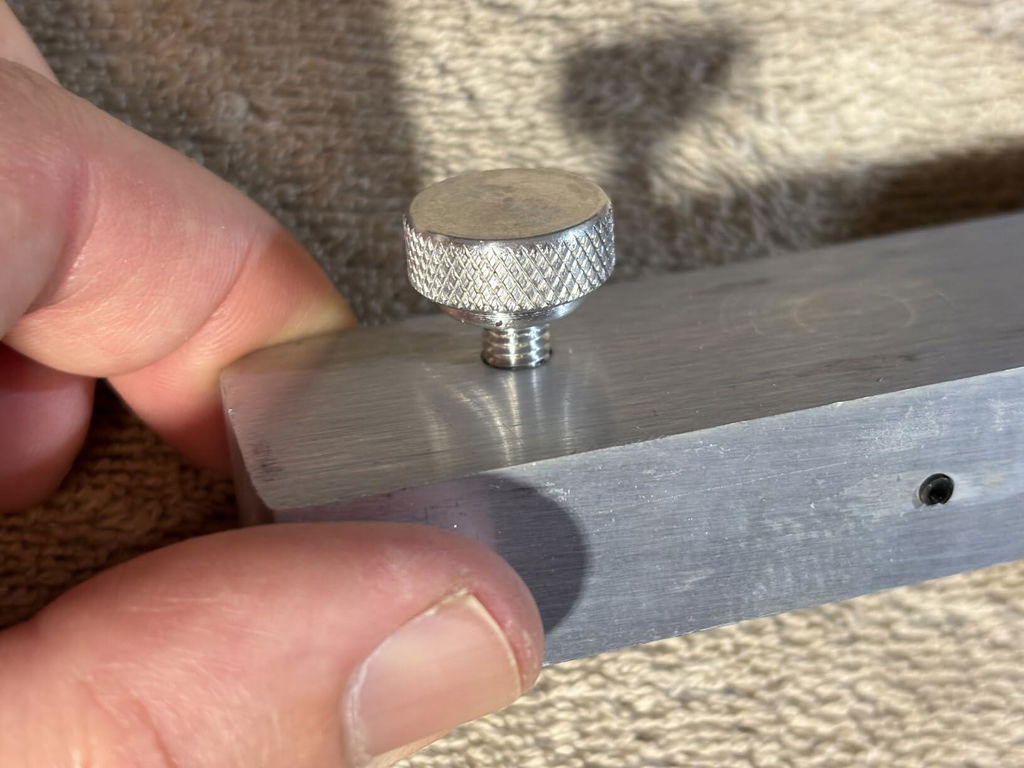
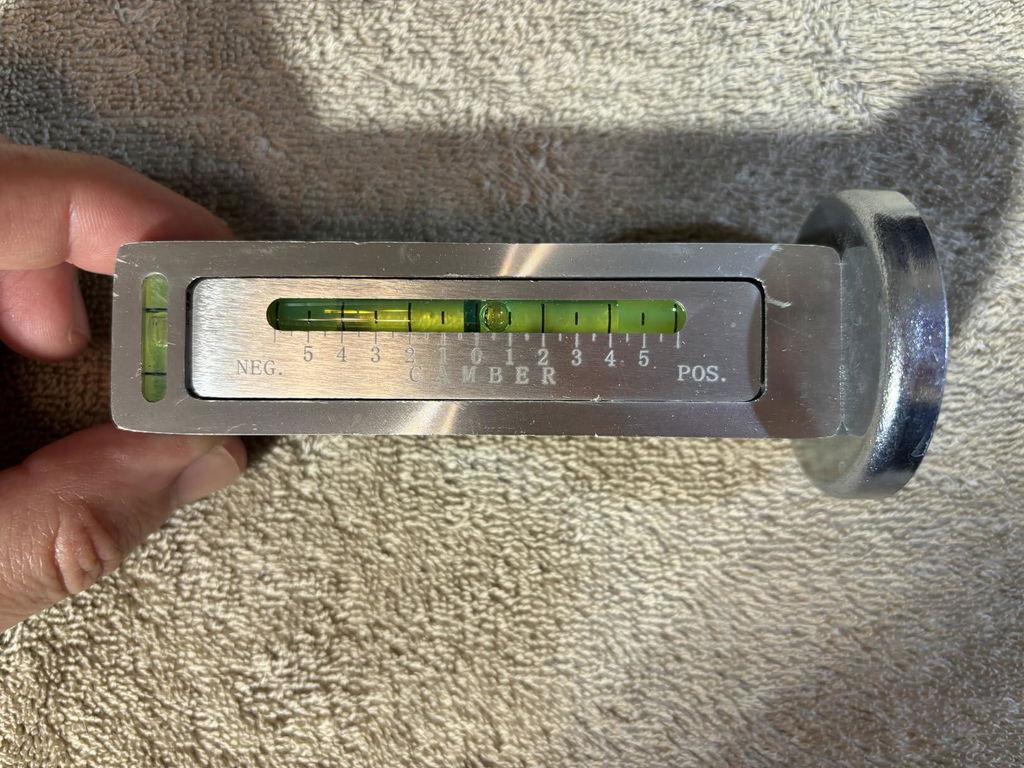
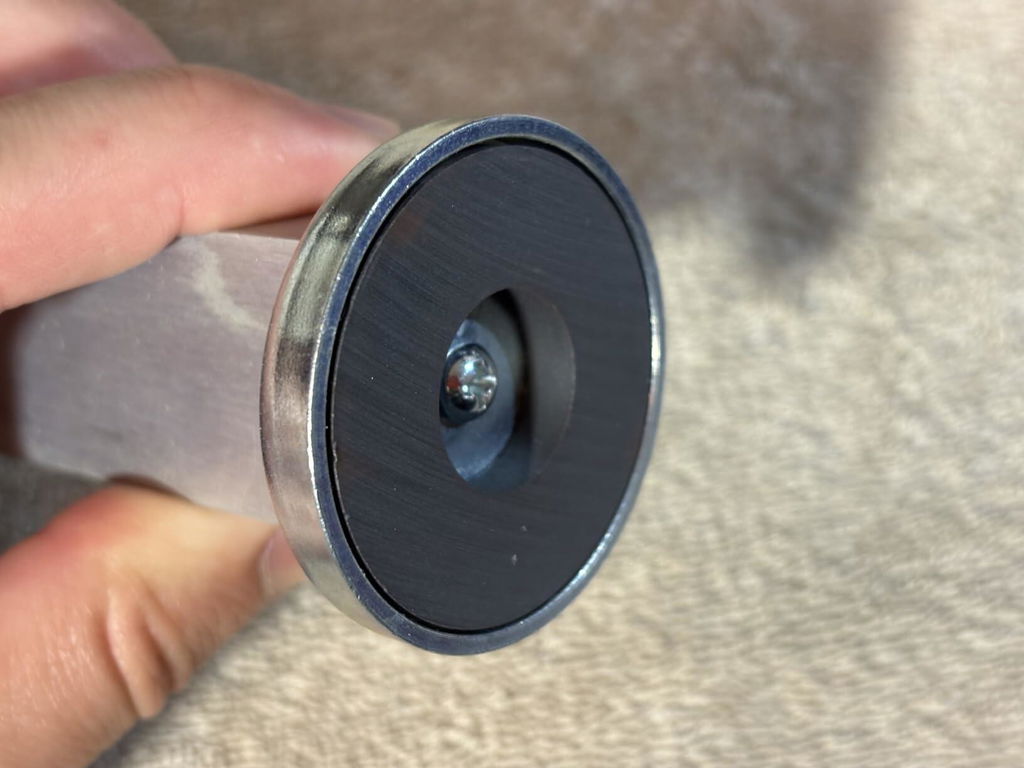
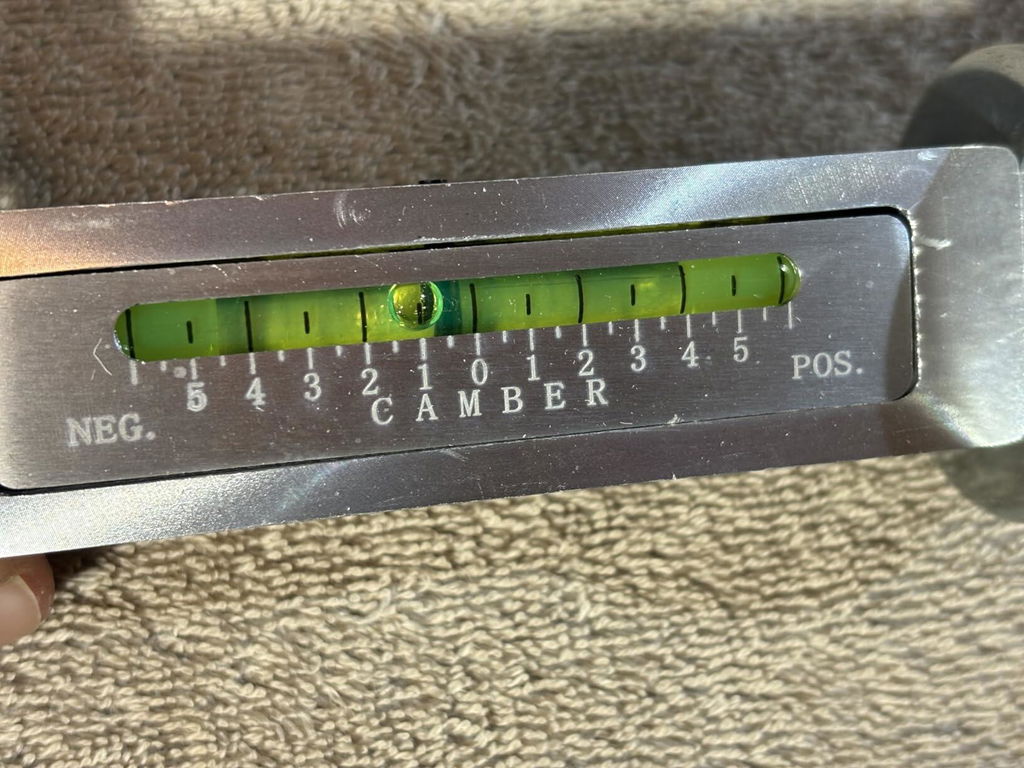
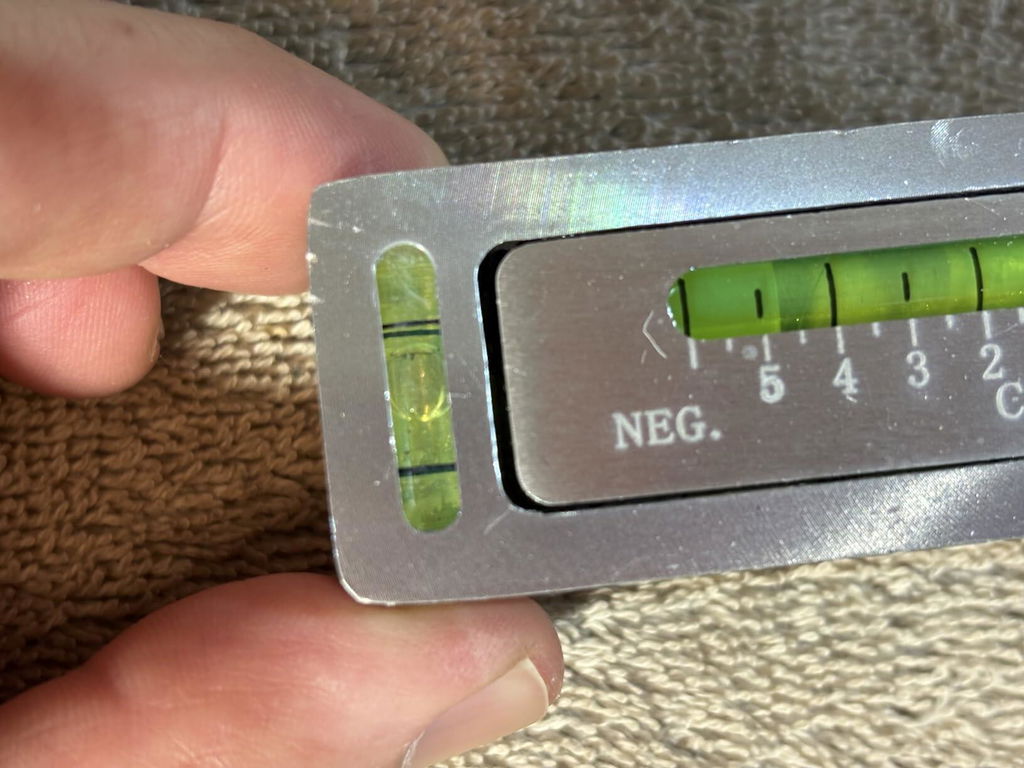
I ordered this a quick way to make sure my suspension is adjusted properly. This basic tool makes it easy for me to adjust camber prior to getting on the track. I am able to set my camber back to what it was before the track very easily. I take a picture of what it was set to on each side of the front end and set it back to that after I am finished. It works great for that purpose. I am not sure I would want to use this do any type of more serious alignment since it is limited 1/2 a degree in accuracy. It's a good quality tool though for basic uses like mine. It easily fits in my helmet bag so I don't forget it. I would recommend this for anyone who changes camber for track or autocross.
I still do some repairs on my own cars. Not as much as I used to but I still do some brake and chassis work myself. This is great to have on hand to get the alignment close until I can get the car to a shop to have a proper alignment performed. The quality was far better than I was expecting for the price. I feel like taken care of these will last a good long while. So far it has worked for me and helped me to get close enough to be able to drive to a shop to have them check the alignment for me.
Great tool for alignment
Obviously if you're a home mechanic there are limited times this type of tool is needed, but when so it's very helpful to simplify basic re-alignment. Especially useful when replacing or just removing and re-installing suspension components during ancillary work which is what I needed it for. The magnet is super strong and dial is easy to read. Very solid option for a quick and simple alignment tool.
Found a couple videos on YouTube of people using an extremely similar tool. Assumed to match what the alignment shop found for the camber. An easy way to know where your camber is sitting
This tool arrives with a basic instruction sheet that I found extremely helpful, considering I'm not a professional mechanic. The camber gauge seems well built, and the magnet is strong. The tool itself is decent looking metal. Using the provided info and some online videos, I was able to figure out how to do my own wheel alignment. Trying to save some $$ because my van is always getting out of alignment, so this has been a really helpful tool!
Lots of various descriptions and reviews online for similar tools. The reality is, any tool is only as good as the user. Alignments are not a secret art, but certainly one of the more misunderstood repairs to complete accurately. Use of the magnet depends on if the brake rotor is accessible through the wheel, or if the wheel is steel, it's outer shape for flat attachment. Any separate repairs, such as worn bushings, bearing damage or missing shims, are for the user to determine. No instructions are included, as there are too many possible applications; solid axle, strut, independent suspension, front wheel drive, etc. If you are comfortable with suspension repairs, have the other necessary tools, and resources or manuals providing correct specs, this is a great and simple tool to help. If you have a vehicle not suitable for a repair shop, such as a vintage car, custom suspension, track car, or off road atv or SxS, this little tool can save you a lot of tire wear.
Well made with easy to follow instrctions. The magnets is strong and it has worked well on my van. I will try it on my car next, but I believe it will do a good job.
Got this to just adjust the suspension after upgrading the control arms on my 09 Corvette. It got me in the ball park before taking it to an alignment shop to get them to actually dial it in. unloaded the suspension for adjustments then reloaded just using the brake rotor. Things were actually pretty close to where I wanted so I imagine if you have the whole apparatus you could get things perfect.
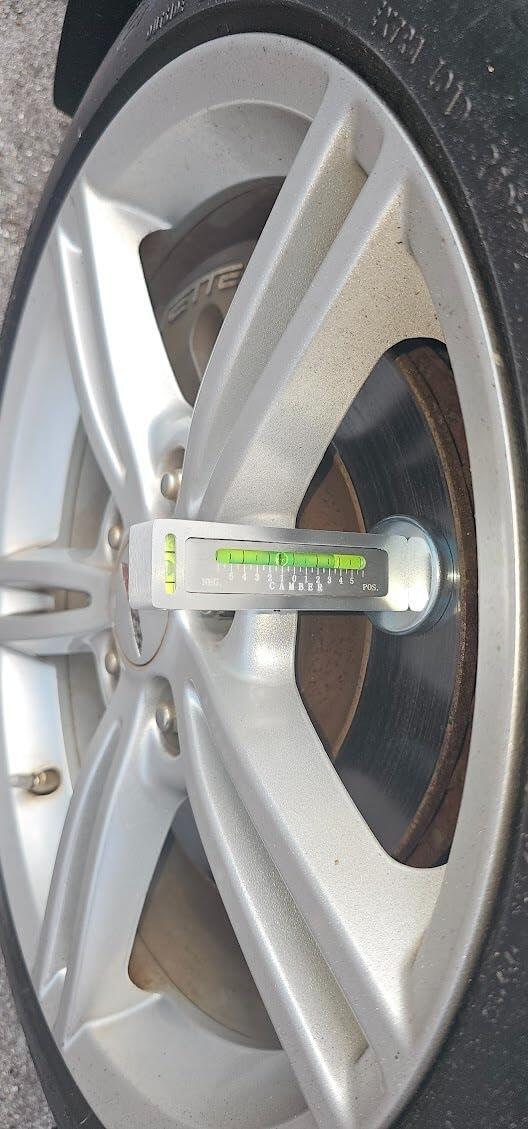
Makes adjustments to camber a breeze. While it isn't a million dollar Laser alignment rack and the accuracy of it isn't that precise, it gets you in the definite ballpark so you can at least drive whatever it is over to the alignment shop without burning up tires in the process. Fairly easy to use, small size so it doesn't take up a lot of space, pretty functional.
This gage gets the job done! I'm using it with the wheel braces made the same company. The magnet is strong enough to keep the gage in place and the design makes the measurements markings easy to interpret. This is a great tool for those who are interested in DIY car alignments. If you have several vehicles it could save you money. It's definitely worth the cost.
My husband got this to use on cart wheels at his off farm job. This has a very strong magnet. It is easy to calibrate. The display is easy to read. There is no mounting bracket, to adjust to different wheel sizes. He's restive, and will make his own, but that's not for everyone. Good price.
Wanting to check the bottom ball joints to see if they were worn out, I wanted to find a tool to see the condition. With the recent concern of my tires being chewed up faster, the idea of a magnetic wheel alignment tool seemed to be a good choice to get some idea of what is going on. Easy to use and following the directions, this tool was extremely helpful. Using the camber and caster alignment tool, I immediately was able to get an idea of a reliable measurement and notice how off the tires were (even after the recent alignment.) Overall, I was able to measure and adjust so the tires on the vehicle were correct and I found out that the ball joints were not an issue.
I may be somewhat biased because I have purchased from this company before and had exceptional customer service after they replaced a missing component on a used item. Expect a similar in the unlikely event that you also have a problem.As far as this item goes, the magnet is Very strong, the spring that works against the thumb adjustment knob has a strong springback, and the bubbles are very visible.My only criticism is that the laser etching could be darker.5 stars for a good value
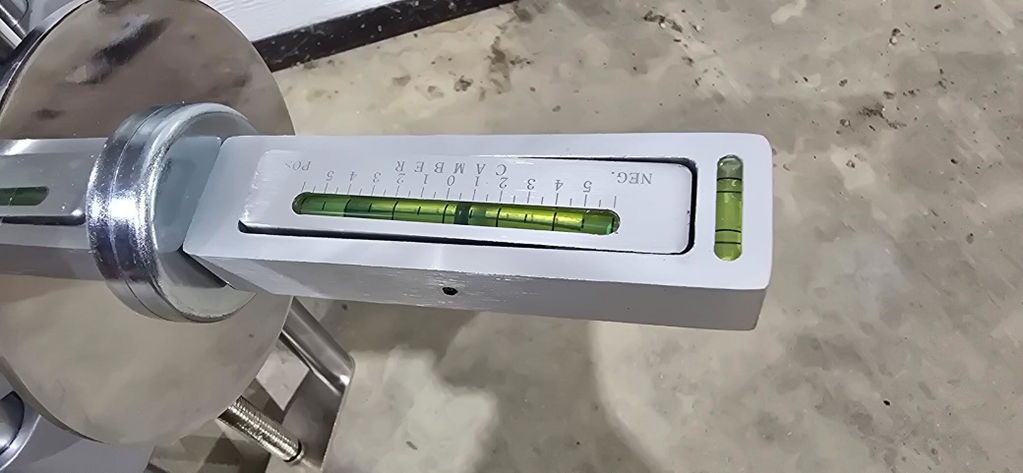
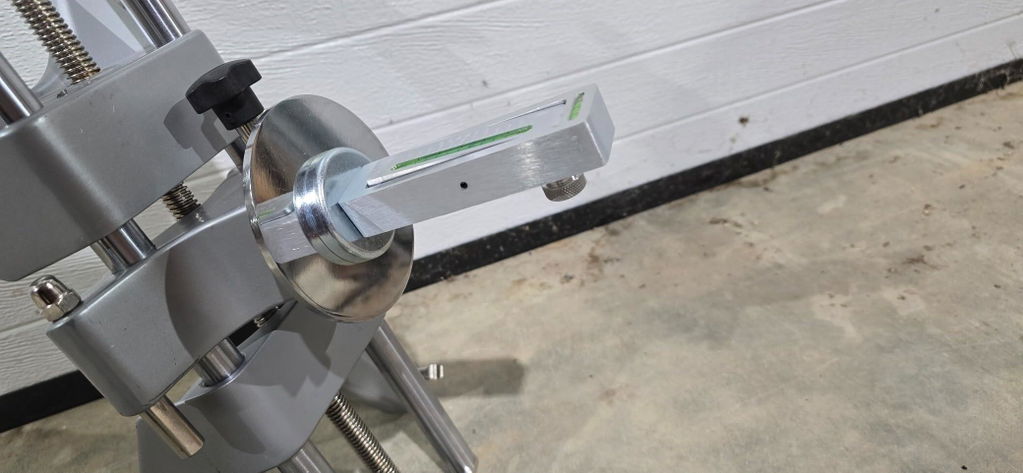
Haven't used this yet but seems like a great durable tool good quality looks easy enough to use easy to hold if any problems I'll update but pretty sure I'm going to be happy with this
I took the magnet off and can set the camber gauge to the degree i want by using a degreed level. Then I can set some pitch on a bench if it needs it. This can also be used to level a board on the wall. The magnet is held on with a screw and is quite strong so it can be used for other purposes if you dont use this for a camber gauge. I think it might be difficult to accurately check camber with this as you have to have a known true surface like a rim not bent that is magnetic or a rotor. The gauge would have to be zeroed first.
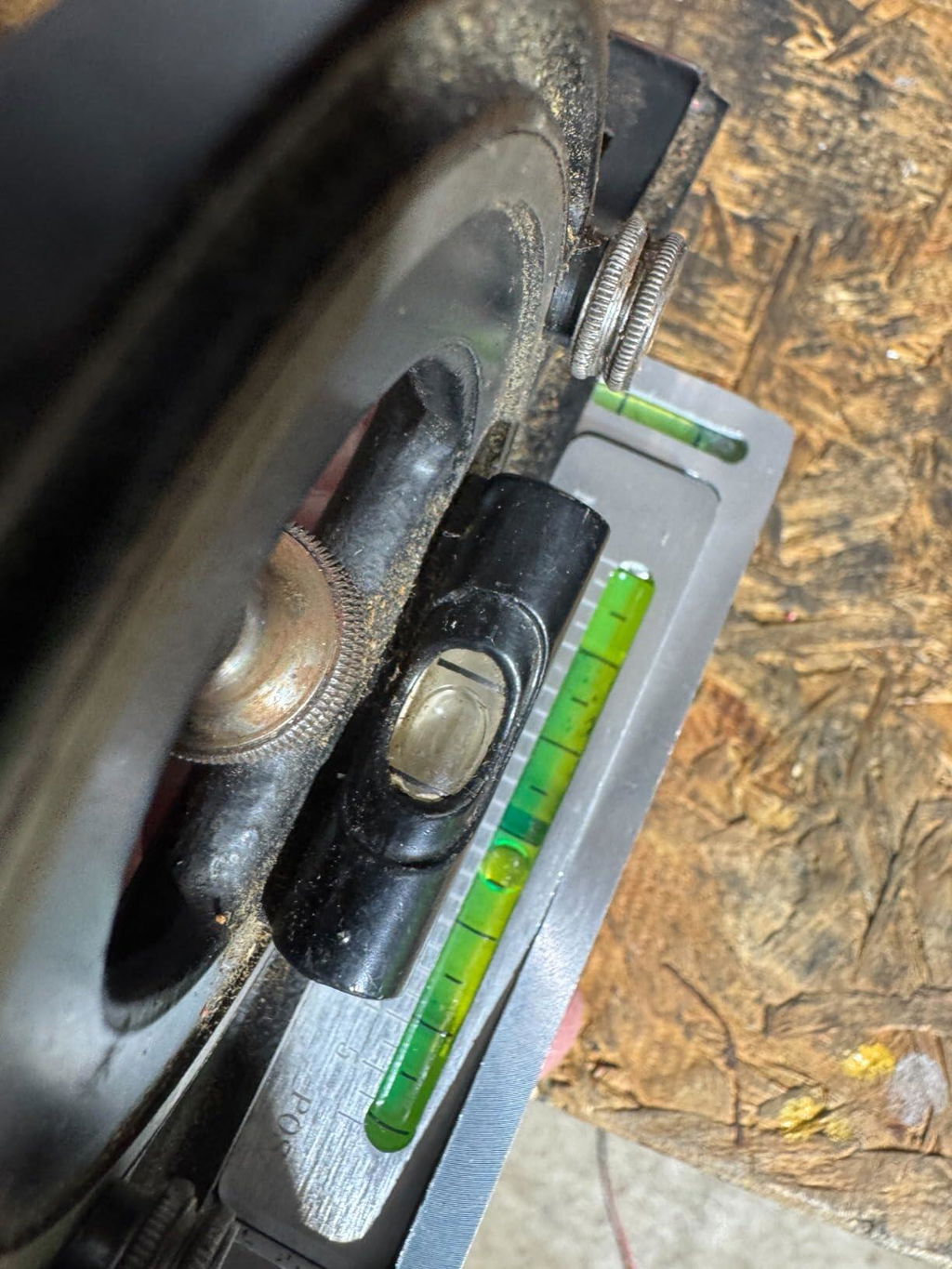
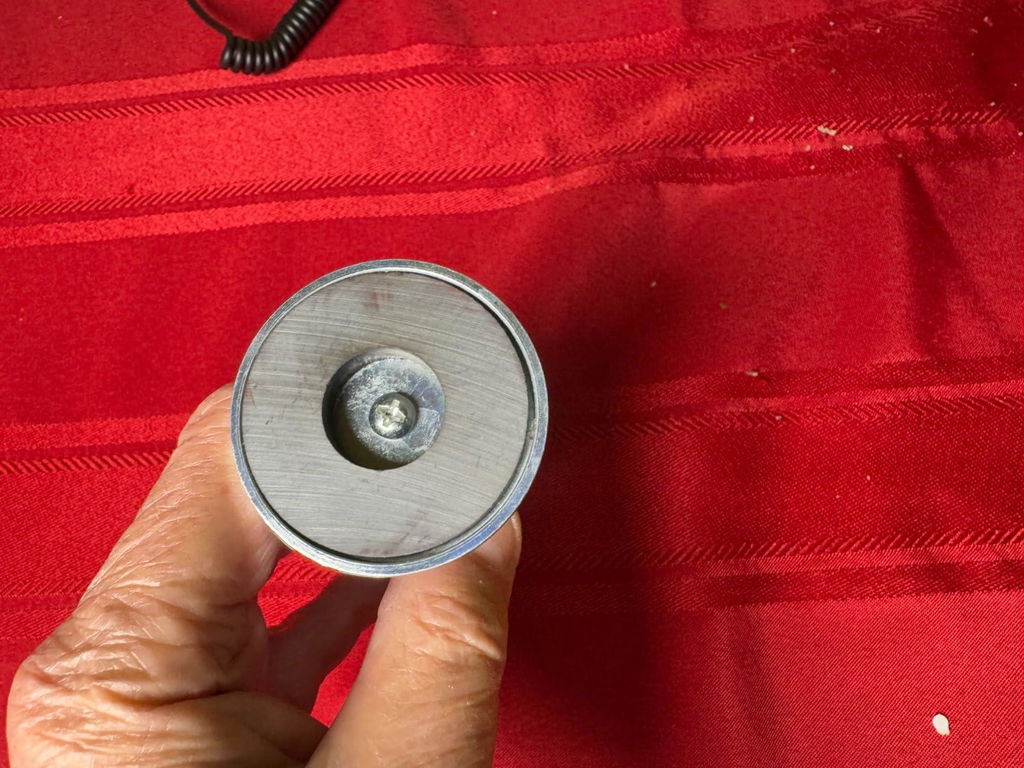
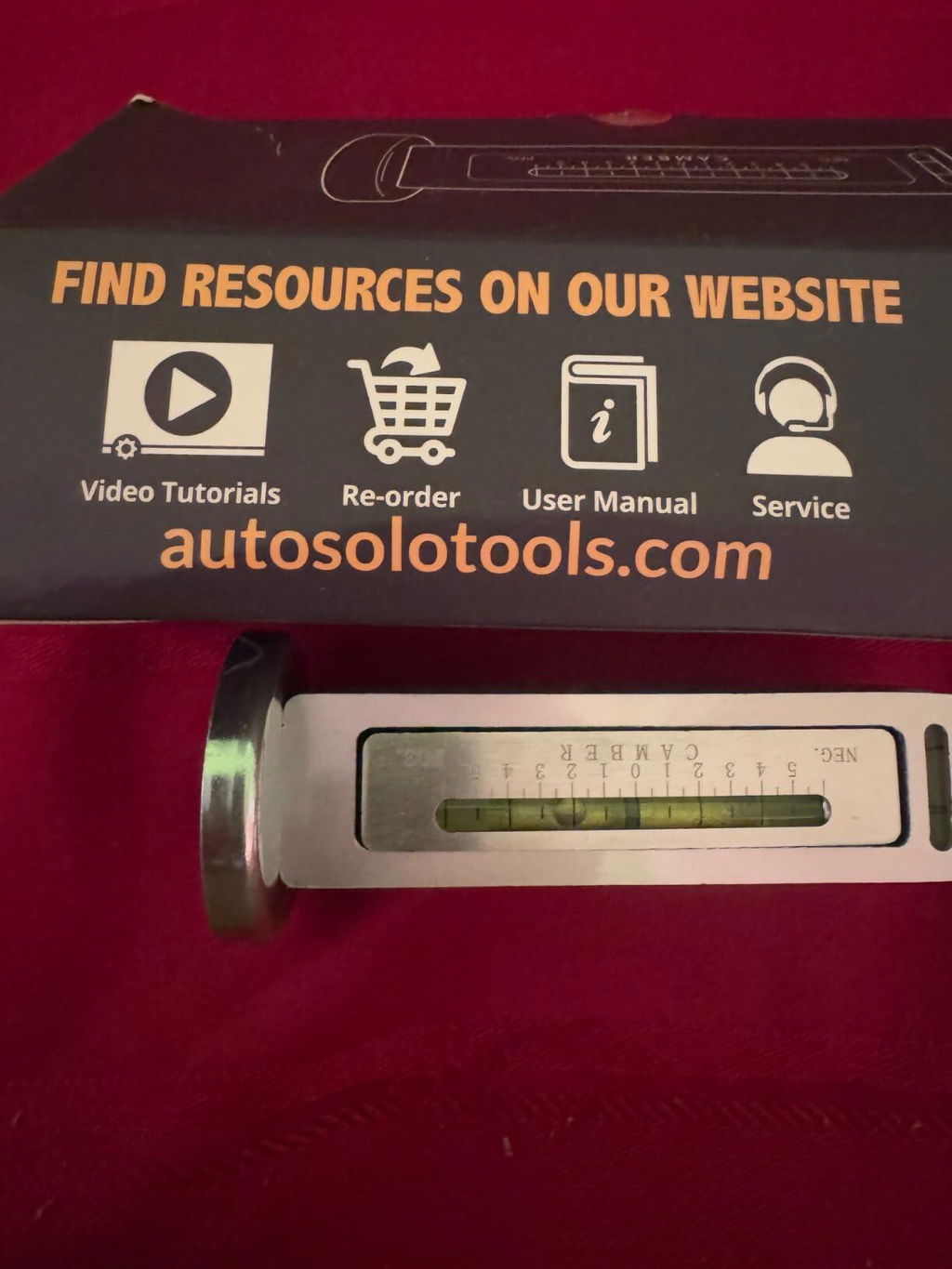
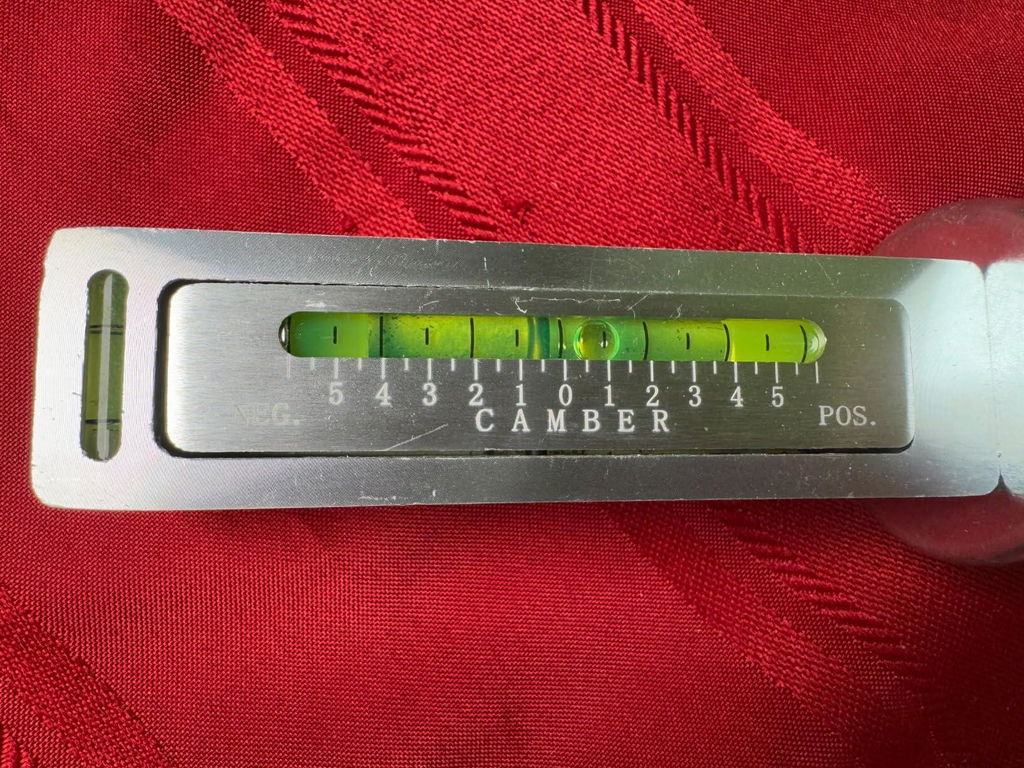
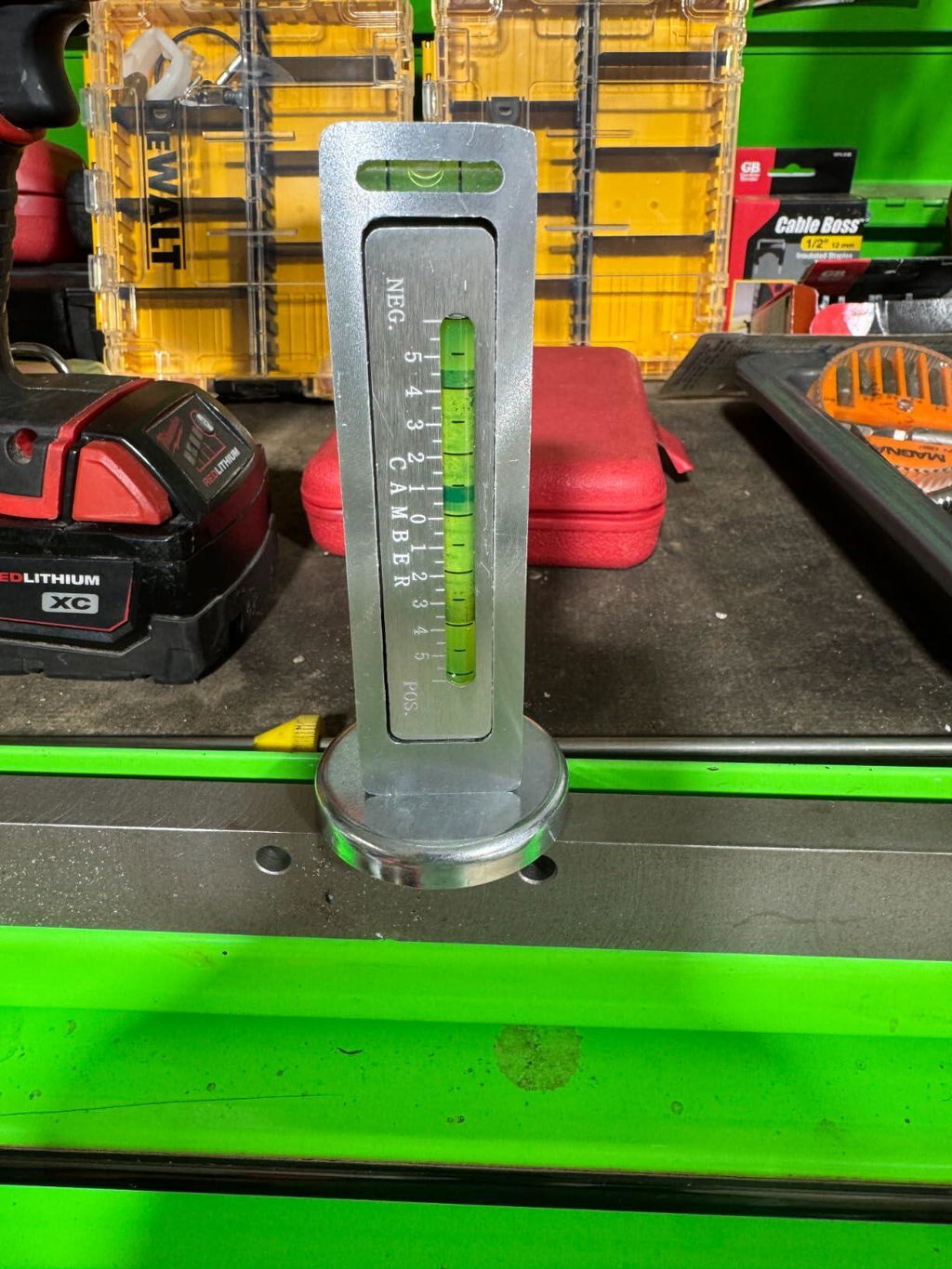
I use this to keep my camber in spec when replacing suspension components, mainly slotted aftermarket struts. I stick the magnet on the vertical center line of the hub or rotor face. Adjust the bubble to the closest line and take note of the measurement. Then just make sure the bubble is in the same place when you secure the new strut in place. The camber is usually still in the green, so it's just toe and go on the alignment rack.
This really helped to rough in the alignment of my SUV after I replaced some steering and suspension parts.
ZACKMAN SCIENTIFIC AutoSolo Camber and Caster Alignment Tool. I checked this against a 60 inch level with a framing square for 0 degrees accuracy. I also checked with a dial inclinometer and accuracy appears dead on. This tool is similar to the Snap-on tool I used 40 years ago in an alignment shop, other than the size. Placement needs to be on the brake disc or hub for a true reading. The magnet is not large enough for the center of the hub like the Snap-on or Bear tools. It is perfect for the home mechanic.
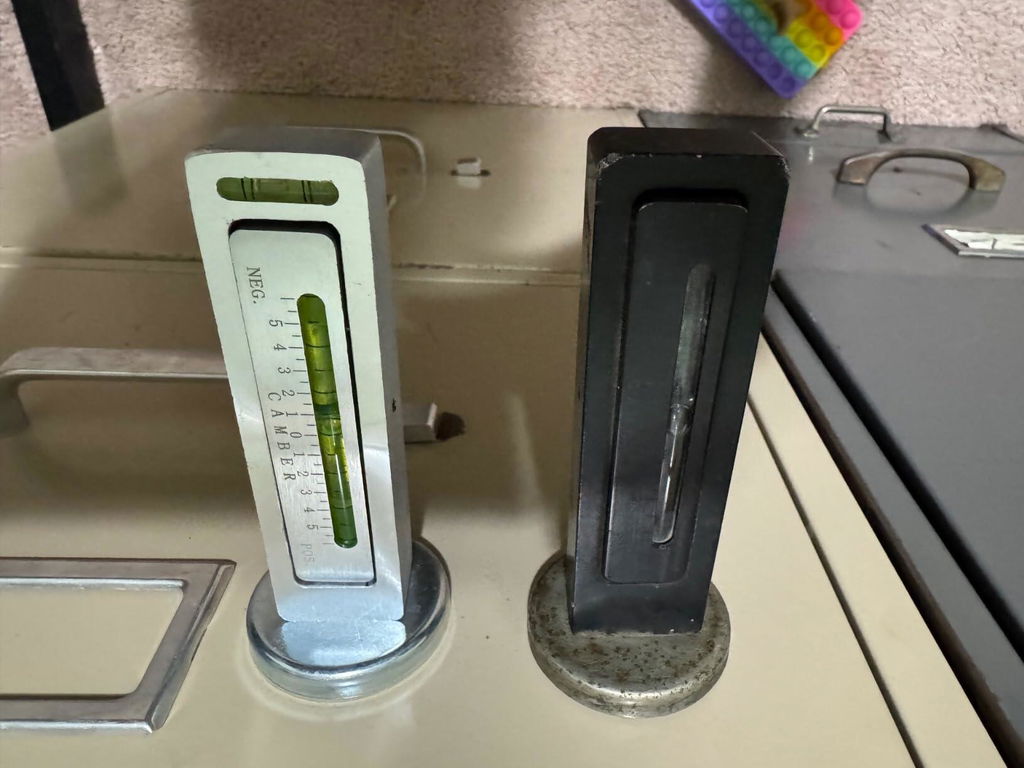
This feels like a fairly well made camber gauge. It functions just as my old one does, but this one is certainly more visible than my older one. It's very easy to use and the magnet is just as strong as my old one.It's certainly worth the money if you need a replacement.It's a bit rough around the edges, probably just from how it was cut. But again, it works, it's easy to adjust, and I'm also not worried about bumping it accidentally and throwing off the gauge. The screw is easy to turn, but not too easy that you could accidentally adjust it.If you need it, get it, it's a good tool to have on hand.In my pictures you can see the old and the new tool.New of course is on the left, old tRusty is on the right